Kidney Specialist Exposes the $4 Billion Gout Industry's Best-Kept Secret
A nephrologist explains why the gout industry profits more from managing flares than from stopping them — and the two-part routine that took his own wife from monthly flare-ups to none in under a year.
As told by Dr. Mark Ellison, nephrologist

The Night I Stopped Trusting My Own Field

It was 4am when I heard Diane cry out from the other room.
I found my wife sitting on the edge of our bed, gripping her foot, unable to let the sheet touch it. Her big toe had swollen overnight — red, tight, shining, like something under the skin was trying to get out.

This was the fourth time in five months.
I've spent close to two decades as a nephrologist. My entire career is built around understanding what the kidneys do — including exactly what happens when they can't clear uric acid from the bloodstream fast enough. I've explained this mechanism to patients more times than I can count.
And none of it stopped it from happening to the person lying next to me at 4am.
That contradiction — knowing the mechanism professionally, and still watching someone I love get blindsided by it, again and again — is what finally made me stop repeating the standard advice and start asking why the standard advice wasn't working.
Doing Everything Right, and Still Losing
Before that night, Diane had done everything asked of her — including things I'd advised myself, professionally, to other patients for years.
She'd cut the organ meat, the shellfish, the beer. She started drinking more water than she ever had in her life. She took her medication exactly as prescribed, on schedule, without fail. For a while, it even seemed to work — three months without a flare, long enough that she'd stopped bracing for it every morning.
Then it came back anyway.
Not because she slipped. Not because she cheated on some rule. She'd done the diet. She'd taken the medication. She had, by every standard both her doctor and the internet had given her, done everything right.
I watched her stop accepting invitations she used to say yes to without thinking — a weekend hike with her sister, a friend's backyard barbecue where she'd have to stand around for hours. Not because she didn't want to go. Because she couldn't predict which week her foot would decide to betray her.
As her husband, that was hard enough to watch. As a kidney specialist, it was something else entirely — because it meant something in my own field's standard playbook was incomplete, and nobody was saying so out loud.

So I went back to the research with a different question. Not "how do we manage this," but "why does managing it so often fail."
What Gout Actually Is (And Why Most People Never Get the Full Explanation)
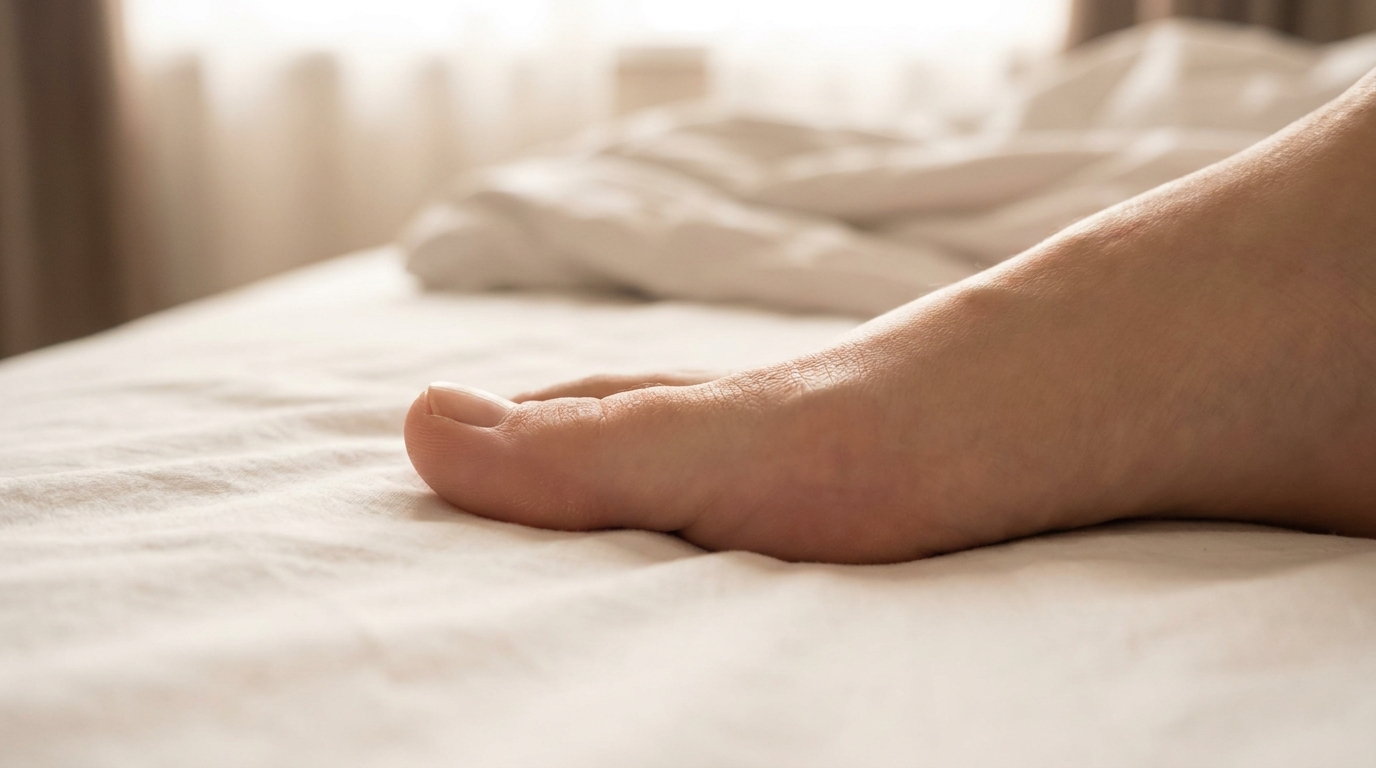
Most people who deal with this only ever get the short version: "it's uric acid." True, but incomplete enough to be almost useless.
Here's the fuller picture. Uric acid is a normal waste product your body creates when it breaks down purines — compounds found in your own cells and in certain foods. Under normal conditions, your kidneys filter it out of your bloodstream and your body clears it without you ever noticing.
Gout happens when uric acid builds up faster than your body can clear it. Once it's built up past a certain point, it can form sharp, needle-like crystals that settle in joints — the big toe first, most commonly, because it's usually the coolest, lowest-pressure joint in the body, which happens to be exactly the kind of environment those crystals form in most easily. Your immune system reacts to those crystals as if they were an invading threat, and that inflammatory response is what actually causes the swelling, heat, and pain of a flare.
This is why it's so often misunderstood as "just getting older," or "just eating the wrong thing the night before." Those things can be contributing factors. They are almost never the whole explanation. And that gap — between the one-line explanation everyone gets and the actual mechanism underneath it — is exactly where the confusion, and the recurring flares, live.
The Two-Part Malfunction Nobody Explains
Here's what I found once I stopped accepting the short version, and it's simpler than the medical language around it suggests.
Picture a sink. Water pours in from the tap, and it drains out the bottom. As long as both sides keep pace with each other, the water level stays where it should. Gout happens when that balance breaks in one of two distinct ways: either too much is pouring in, or the drain can't clear it fast enough.
Almost every piece of standard advice assumes it's the tap. That's why the entire conversation around gout revolves around what you eat and drink — purine-rich foods, alcohol, red meat. Cut the input, fix the problem. It's intuitive, and for some people it's even sufficient.
But for a large share of gout sufferers — Diane included — the tap was never the real issue. The drain is. Your kidneys are responsible for clearing built-up uric acid out of your bloodstream, and for a lot of people, that clearing process simply isn't keeping pace, regardless of how carefully they manage what's going into the sink.
That's why cutting diet alone so often stops working, or never fully works to begin with. You can turn the tap down as far as it physically goes. If the drain is still slow, the water keeps rising anyway. It just rises more slowly — which is exactly why flares seem to disappear for a few months and then return "out of nowhere." The level was climbing the entire time. You just couldn't see it until it crested.
This is also why prescription medication alone often isn't the full answer. Most gout medications work on the tap side — reducing how much uric acid your body produces in the first place. Genuinely useful. Still only half of a two-part problem.
The Missing Half of the Fix
Once you see gout as a two-part problem, the actual fix becomes obvious: you need something that works on both sides of the sink at once. Something that helps flush what's already built up, while also helping reduce how much your body produces in the first place.
Not one or the other. Both, at the same time.
This isn't a theory I'm proposing from a hunch. A clinical study published in Arthritis Research & Therapy tracked participants using a combined approach targeting both sides of uric acid regulation, and found they averaged 0.56–0.58 flares per participant — compared to 0.94 flares in the control group. Nearly half the flare rate, simply from addressing both mechanisms instead of one.
That's the gap almost the entire $4 billion gout industry doesn't lead with. Single-ingredient supplements, one-note prescriptions, and diet-only advice all quietly bet on fixing one side of the sink, because that's the simpler product to sell — one ingredient, one story, one line on a label. The data says the real reduction in flares comes from hitting both sides at once, and almost nothing on the market is actually built that way.
Building the Real Fix
Once you know what the body actually needs — a flush mechanism and a production-reducing mechanism, working together — the question stops being "what's the one magic ingredient" and becomes "what combination actually covers both sides."
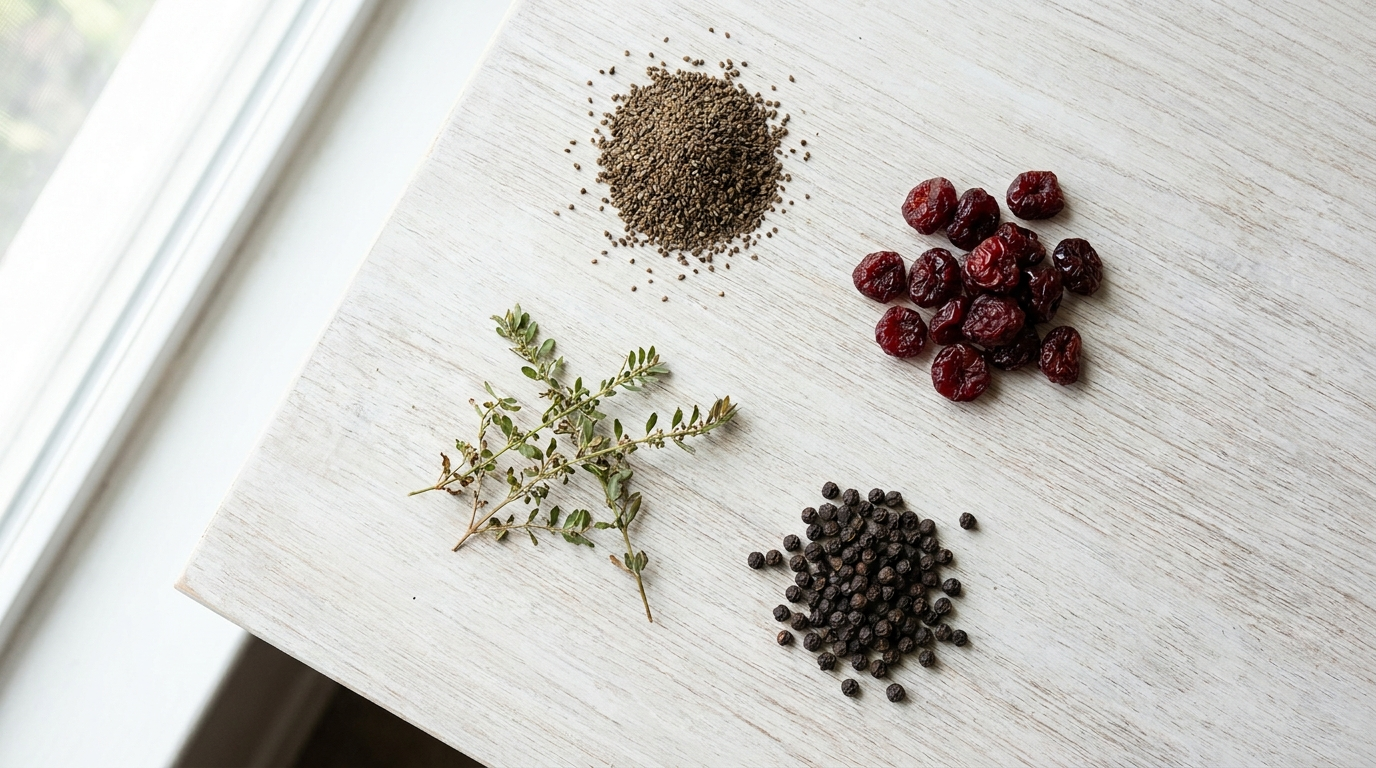
Celery Seed extract has long been used to support the kidneys' ability to flush excess uric acid out of the bloodstream — the drain side of the sink.
Tart Cherry, separately, has research behind its role in helping reduce uric acid production at the source — the tap side.
On their own, each does half the job, which is exactly why so many single-ingredient products sitting next to each other on the same shelf only ever produce partial, inconsistent results. Alongside them, Chanca Piedra supports the body's broader detox pathways, helping the whole system process what's being cleared. BioPerine is included specifically to improve how well all of it actually gets absorbed — because a mechanism the body doesn't absorb doesn't do anything at all, no matter how sound the science behind it is.
Put together, it's not a list of ingredients competing for space on a label. It's the tap and the drain, addressed at the same time, in a single daily routine.
The Product
That combination is what became AuricSecrets Uric Acid Purge Detox & Cleanse.
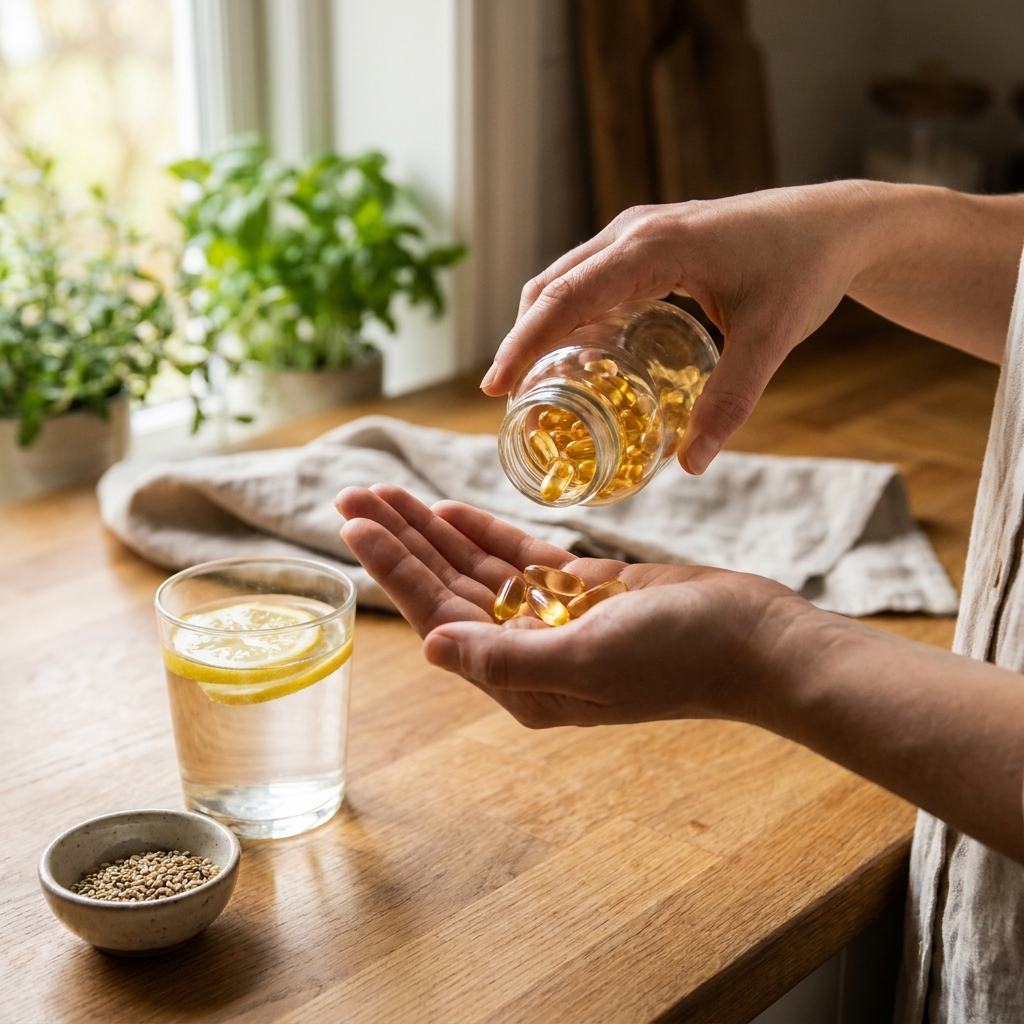
Not built around a single trending ingredient, and not built by a supplement brand guessing at what might work. Built around the two-part mechanism the research — and my own wife's experience — pointed to from the start: flush what's already built up, while reducing what's still being produced, without asking her to give up the foods and drinks she loved on top of everything else she was already managing.
Where We Are Now
Diane started taking it daily. Within the first few weeks, she noticed she'd stopped bracing every morning to check her foot before it even touched the floor.

"I catch myself not thinking about my joints as much anymore. Mark noticed before I did — he said I was moving differently."
She hasn't had a flare since. I'm not going to call it a miracle cure — as a physician, I don't use that language, and you shouldn't trust anyone in this space who does. What I'll say instead is simpler, and it's what Diane herself says when people ask:
"It's made a real difference. I wish we'd found this a year earlier."
Here's what that difference is actually worth. The average household managing recurring flares spends far more than they realize — missed workdays, urgent care visits, prescriptions that only ever address half the mechanism, and the vacations and family moments quietly skipped along the way because you can't predict which week your foot will decide to betray you. A bottle of AuricSecrets Uric Acid Purge costs less than a single co-pay.
- 60-count bottle, full 30-day supply$29.99
- Dual-mechanism formula (flush + reduce)Included
- BioPerine absorption supportIncluded
- 30-Day Money-Back GuaranteeIncluded
Compare that to what's likely already on your shelf: a single-ingredient tart cherry supplement handles half the mechanism. A separate celery seed capsule handles the other half, at a separate price. AuricSecrets is built to do both, in one routine, for less than the cost of buying two separate half-solutions.
We back it with a straightforward 30-day money-back guarantee. Try it. If you don't notice a difference, send it back — no complicated return process, no hassle. The only real risk here is waiting through another 4am flare while the two-part problem keeps compounding in the background, whether or not you can feel it happening yet.
Claim Your Bottle at the Discounted Price30-Day Money-Back Guarantee · Offer available while supplies last